
october 2026
Dutch municipalities face a significant challenge. Bus shelters need to be safe, sustainable and attractive, while also withstanding vandalism. At the same time, municipalities are under pressure to keep maintenance and replacement costs as low as possible.
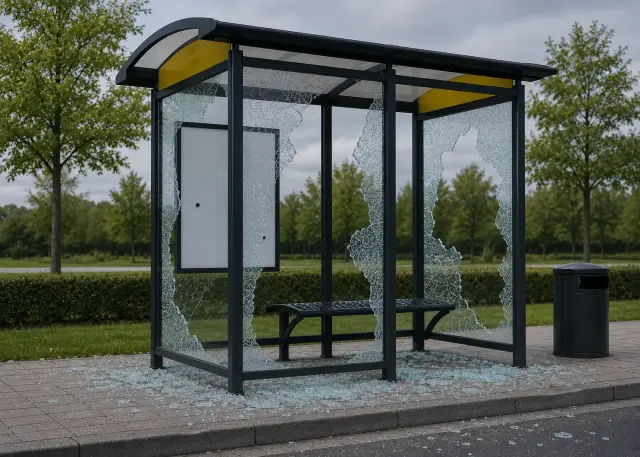
After all, a shattered panel means more than just a damaged bus shelter. It involves costs for materials, disposal, transport, installation and labour. The shelter may also remain damaged for an extended period.
This is an ongoing issue. In Leiden, for example, at least thirteen bus shelters were vandalised in a single week in spring 2026. New Year celebrations consistently result in extensive damage to street furniture. Municipalities are exploring ways to make it more resistant to vandalism. In Berkelland, for instance, vandal-resistant solutions for damaged bus shelters are explicitly being discussed, including polycarbonate glazing panels.
It is therefore important to look beyond the initial purchase price of a panel and consider the Total Cost of Ownership (TCO).
Polycarbonate: strong and lightweight
Impact-resistant polycarbonate (PC) is increasingly being chosen for bus shelters. This material is much lighter than glass and offers exceptionally high impact resistance. However, there are significant differences between plastic sheet materials.
For use in public spaces, scratch resistance, UV resistance, fire performance and surface protection are just as important as impact resistance.
High-quality polycarbonate can achieve an excellent reaction-to-fire classification. Depending on the product and its thickness, classifications such as B-s1,d0 in accordance with EN 13501-1 are possible. This indicates a limited contribution to fire, low smoke production and no flaming droplets. Watch this short video on the fire performance of acrylic and PC: Watch the video on LinkedIn.
Nglaze: safety glazing for public spaces
With Nglaze, Nanogate Netherlands offers a solution specifically suited to demanding applications such as bus shelters and street furniture.
The combination of impact-resistant polycarbonate and a high-quality scratch-resistant coating provides:
- resistance to vandalism;
- safety;
- scratch and abrasion resistance;
- low weight and easy installation;
- ease of maintenance;
- sustainability through a long service life;
- and, as a result, potentially lower total costs.
From low-cost replacement to long-term savings
A panel that is less likely to break and retains its appearance for longer needs replacing less often. That means less material consumption, fewer transport and installation operations, and less maintenance.
Sustainability therefore lies not only in the material itself, but also in its service life.
For municipalities installing new bus shelters or refurbishing existing ones, now is the time to look beyond the price per panel.
With Nglaze, municipalities choose a future-proof glazing solution that combines safety, sustainability, vandal resistance and cost control.
Ready to reduce the TCO of your bus shelters?
Nanogate Netherlands welcomes the opportunity to work with municipalities, designers and suppliers to select the right glazing for new and existing bus shelters. Glazing with a low environmental footprint that is safe, efficient, sustainable, attractive and practical in use.
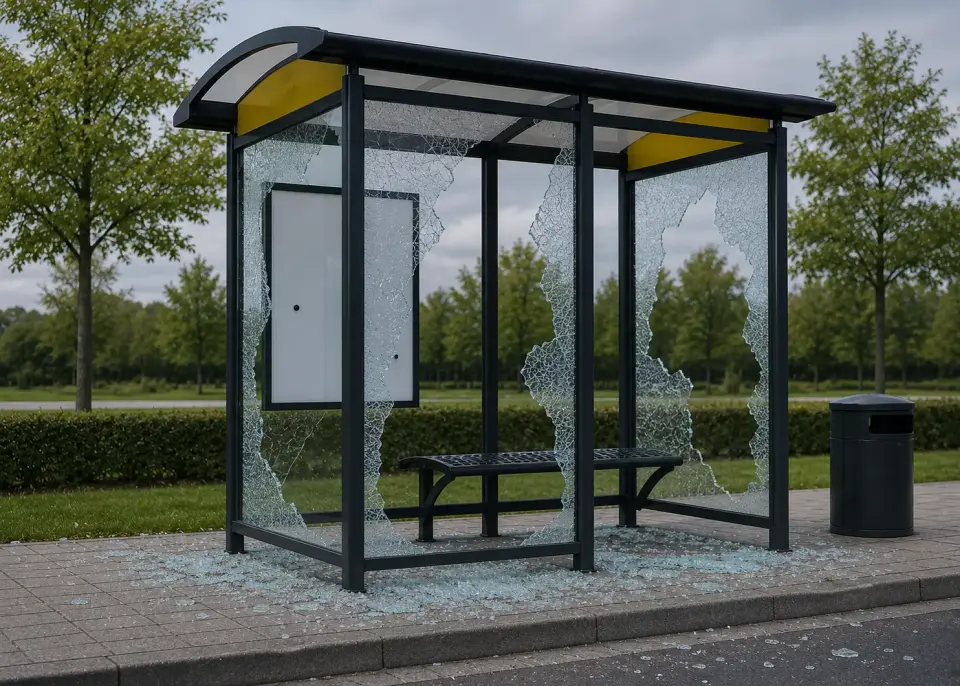
After all, a shattered panel means more than just a damaged bus shelter. It involves costs for materials, disposal, transport, installation and labour. The shelter may also remain damaged for an extended period.
This is an ongoing issue. In Leiden, for example, at least thirteen bus shelters were vandalised in a single week in spring 2026. New Year celebrations consistently result in extensive damage to street furniture. Municipalities are exploring ways to make it more resistant to vandalism. In Berkelland, for instance, vandal-resistant solutions for damaged bus shelters are explicitly being discussed, including polycarbonate glazing panels.
It is therefore important to look beyond the initial purchase price of a panel and consider the Total Cost of Ownership (TCO).
Polycarbonate: strong and lightweight
Impact-resistant polycarbonate (PC) is increasingly being chosen for bus shelters. This material is much lighter than glass and offers exceptionally high impact resistance. However, there are significant differences between plastic sheet materials.
For use in public spaces, scratch resistance, UV resistance, fire performance and surface protection are just as important as impact resistance.
High-quality polycarbonate can achieve an excellent reaction-to-fire classification. Depending on the product and its thickness, classifications such as B-s1,d0 in accordance with EN 13501-1 are possible. This indicates a limited contribution to fire, low smoke production and no flaming droplets. Watch this short video on the fire performance of acrylic and PC: Watch the video on LinkedIn.
Nglaze: safety glazing for public spaces
With Nglaze, Nanogate Netherlands offers a solution specifically suited to demanding applications such as bus shelters and street furniture.
The combination of impact-resistant polycarbonate and a high-quality scratch-resistant coating provides:
- resistance to vandalism;
- safety;
- scratch and abrasion resistance;
- low weight and easy installation;
- ease of maintenance;
- sustainability through a long service life;
- and, as a result, potentially lower total costs.
From low-cost replacement to long-term savings
A panel that is less likely to break and retains its appearance for longer needs replacing less often. That means less material consumption, fewer transport and installation operations, and less maintenance.
Sustainability therefore lies not only in the material itself, but also in its service life.
For municipalities installing new bus shelters or refurbishing existing ones, now is the time to look beyond the price per panel.
With Nglaze, municipalities choose a future-proof glazing solution that combines safety, sustainability, vandal resistance and cost control.
Ready to reduce the TCO of your bus shelters?
Nanogate Netherlands welcomes the opportunity to work with municipalities, designers and suppliers to select the right glazing for new and existing bus shelters. Glazing with a low environmental footprint that is safe, efficient, sustainable, attractive and practical in use.